


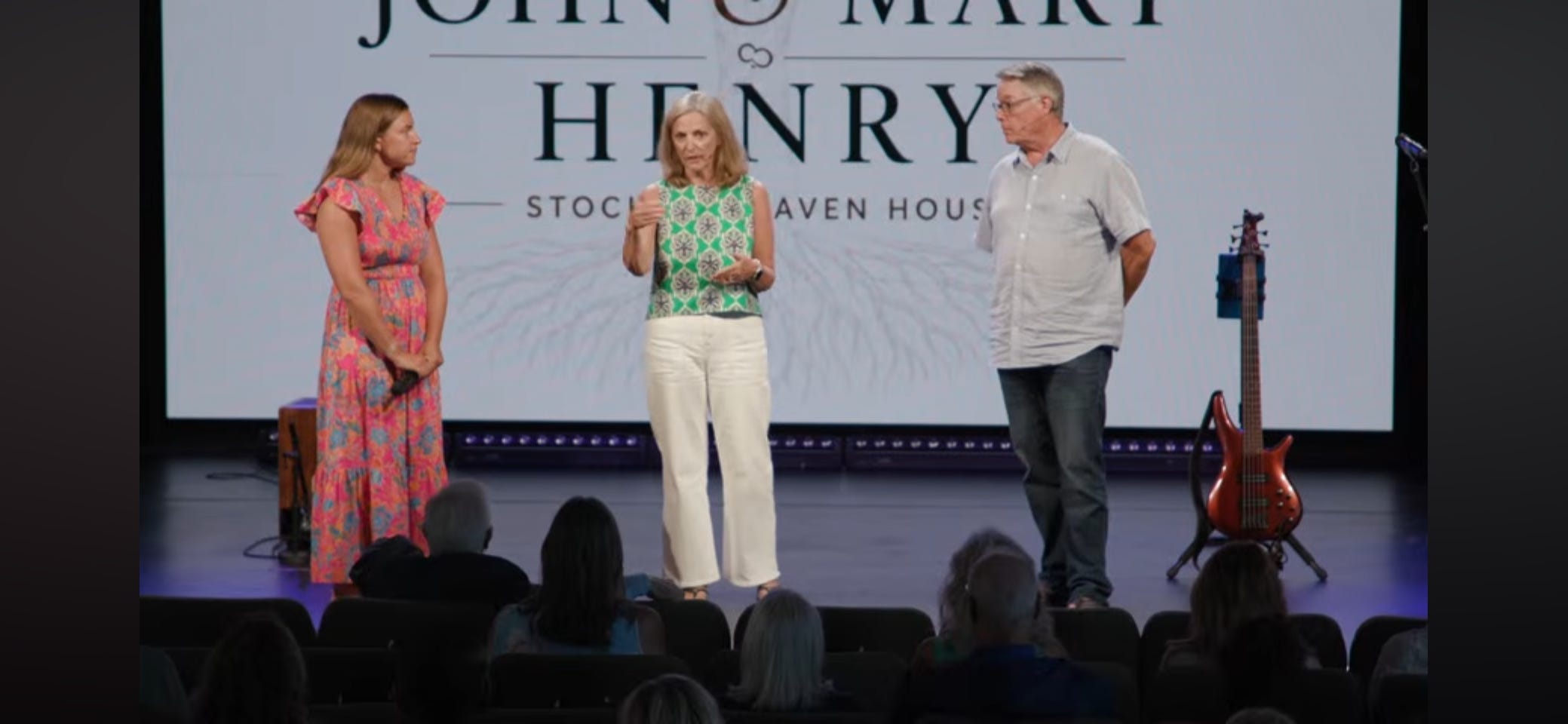
1. Who is John Henry? What is Haven House Christian Study Center?
My wife, Mary, and I have served with Youth With A Mission for forty years, since we first trained in 1985. Our mission is to help university students connect their education, profession, and calling with God’s global purposes. To do that, we formed a team, founded the YWAM Student Centre in 1998, and developed a university ministries training course that has equipped campus missionaries in about 100 cities across 35 countries.
Today, much of our focus is on Haven House Christian Study Center — a new project designed to create a place where students, scholars, professionals, and missionaries can explore the relationship among faith, vocation, discipleship, and global mission.
Haven House is more than a house or a building. It’s a spiritual and intellectual community because we are loving God with all our hearts and minds. We want it to become a place where students can ask deep questions about purpose, truth, calling, culture, and the future of society through a biblical worldview.
Over the years, we’ve mobilized hundreds of students from more than 100 universities to over 40 nations through internships and mission assignments. Students served alongside ministries, schools, hospitals, and community organizations while integrating their fields of study with service, evangelism, prayer, and vocational discernment.
What excites me most is helping students realize every field — engineering, medicine, education, business, communications, agriculture, or the arts — can become a platform for God’s Kingdom.
2. How did this begin?
This vision grew from two lifelong passions: world missions and the university.
I began to see that universities were never intended to be spiritually neutral institutions. A book by Charles Habib Malik, a Lebanese intellectual and the first General Secretary of the United Nations, helped me understand something that much of our world has forgotten. Malik not only helped pass the Universal Declaration of Human Rights, the UN's first resolution, but also wrote a book titled A Christian Critique of the University. Malik brilliantly outlined how history’s great universities emerged from a Christian worldview in which the pursuit of truth was connected to knowing God and understanding His creation.
At the same time, I saw students preparing for careers without understanding how their professions could participate in God’s mission. Many assumed missions were only for pastors or evangelists.
But Scripture and history tell a larger story. God is the original creator, teacher, healer, communicator, architect, and builder. Human creativity reflects His nature.
You might say the Church worldwide fell asleep and forgot her story. We’ve been commanded to go into all the world and make disciples of all nations, but many Christians are looking for their rescue from the world.
Another great 20th-century missionary to India, Leslie Newbigin, compared the modern Western Church's worldview to Eastern mysticism in his book Signs Amid the Rubble. The vast majority of Christians are fascinated with end times and the rapture, and they mistakenly think the rapture is an escape.
What have we forgotten? Mission history shaped education, literacy, medicine, translation, agriculture, transportation, and communications. Christian leaders emerging from universities produced scientific, medical, and technological breakthroughs. Economic and Governmental systems were established from a Biblical Christian worldview, which codified the understanding that God has given to all humanity the rights of life, liberty, and the pursuit of happiness. Universities were founded with a missionary purpose, and missionaries were sent to pioneer schools, hospitals, banking systems, farming practices, and churches. Missionaries translated the Bible and therefore produced dictionaries and printing presses, because the Gospel is intended to touch every part of life.
That vision eventually led us to say “Yes” to pioneering Haven House Christian Study Center — a place dedicated to forming students spiritually, intellectually, and vocationally for lives of service and leadership.
A local Christian businessman, Ken Happle, called us after being discipled in a house off the Stockton campus over 40 years ago. He was introduced to me because of our work with students. He and his ministry organization partnered with YWAM Student Centre and purchased the house.
3. What is your vision?
Our vision is to see a generation of believers who no longer divide the sacred from the secular, and who joyfully participate in God’s amazing mission to bring the glory of the nations to honor and worship Jesus Christ.
We want students to understand that their vocation is meant to be their ministry, their life’s work is their offering—whether they are engineers, teachers, doctors, artists, entrepreneurs, scientists, counselors, or communicators.
Haven House exists to help cultivate that worldview.
Haven House is becoming a place of discipleship, hospitality, learning, mentoring, prayer, and thoughtful Christian engagement with culture and society.
I believe the university remains one of the most strategic mission fields in the world because nearly every sphere of society flows through it — government, healthcare, law, media, economics, education, and technology.
Modern transportation, “going,” and communications technologies, “preaching,” have also created unprecedented opportunities for global missions. Technology is not the enemy. It is a tool that can help accelerate the fulfillment of Christ’s command to “go into all the world and preach the Gospel.”
4. What’s unique about your approach?
Our approach emphasizes integration.
We do not separate spiritual formation from intellectual development or professional preparation.
At Haven House, we want students to sit together with Christian faculty and alumni at mealtimes to wrestle honestly with faith, truth, calling, culture, and vocation. Through personal mentorship, we will help direct them toward a deeper love for God and their neighbors, and toward practical ministry experiences through service and missions.
After decades of experience leading students to learn humility through real-world service alongside long-term ministries and organizations, we also hope to help them learn to listen, serve, and honor all people made in God’s image.
As Loren Cunningham said, “The way you discover your gifts is really by serving, not by searching.”
5. Where do you hope to be in five years?
In five years, my wife and I would love to see Haven House become a thriving center for Christian study, discipleship, hospitality, and mission engagement.
A miracle to me would be seeing thousands of students graduate with a deeply biblical worldview — understanding that every legitimate field of study can serve God’s Kingdom and the Great Commission.
I would also love to see stronger partnerships among universities, churches, ministries, and professionals to mentor and send students into strategic service around the world. That said, I would love to see church communities engaged in every aspect of the university community because they have experienced a fresh spiritual awakening.
6. What have you learned from leaders?
I’ve learned that humility matters more than gifts, charisma, personality, wealth, or title.
The leaders who shaped me most prayed deeply, listened carefully, loved sincerely, and remained faithful over decades.
These things matter more than academic degrees. Vision without character eventually collapses. Leadership is stewardship, not ownership.
7. What has been the hardest season?
One of the hardest parts of long-term ministry is watching people become discouraged or drift away.
There are also seasons when finances become uncertain or years of work seem fragile.
Those seasons taught me that ministry success can't be measured primarily by numbers or recognition. Faithfulness matters deeply to God. What we do in secret, when nobody is watching, defines who we are.
8. Who are you best positioned to help?
We are especially called to help university students, young professionals, and emerging leaders who are wrestling with deeper questions about purpose, faith, vocation, and calling.
Many students feel tension between spiritual passion and professional ambition. We help them see that God can use both together.
Because Mary and I have been doing this for more than a generation, and we are finally becoming grandparents, we also offer spiritual guidance to young couples engaged to be married or recently married. We are partnering with one of our local churches using the SYMBIS Assessment.
9. Who do you want on your team?
We want people who are teachable, courageous, spiritually grounded, and willing to serve. Humble, Hungry, and Smart, as Patrick Lencioni says.
People who love truth, value humility, pursue excellence, and remain lifelong learners.
We seek one male and one female YWAM staff member to join us as residents at Haven House. We also welcome a married YWAM couple who live in the neighborhood to join our team.
10. How can people partner with you?
First, through prayer.
Second, through mentorship. Students desperately need wise believers to guide them spiritually and vocationally.
Third, through financial partnerships that help create opportunities for students to participate in mentorships, resident fellowships, and international internships.
And finally, through relationships and collaboration with churches, ministries, universities, and professionals who share this vision.
11. What advice would you give someone wanting to do this work?
Start by serving faithfully where you are.
Study hard. Learn cultures and languages. Develop spiritual disciplines. Be hospitable. Open your home and table to students and young adults who want to learn how to live as a Christian in a chaotic, disconnected world.
Missions is not primarily about travel — it’s about love, obedience, and service. It’s about knowing God and making him known. We accomplish that by making ourselves truly known.
I believe the most effective missionaries combine humility and teachableness with spiritual maturity and practical usefulness.
12. How does someone discover God’s calling?
People usually discover calling progressively, not instantly. If God told you everything now, you might not believe it, and you would miss out on the amazing journey he has for you.
God often reveals calling through service, relationships, Scripture, prayer, gifts, burdens, and open doors. Relationships are key.
Pay attention to what breaks your heart, and what breaks God’s heart. Give God time to work through your story, including your pain points. You cannot know your calling if you do not truly know your story.
What gives life to your spirit, and where do your gifts meet real human need? That’s your calling.
Don’t look for the “color of your parachute,” as if some magic key could unlock your calling. Ultimately, the goal isn't self-fulfillment but a genuine relationship with, and faithfulness to, God. Your calling is to Him and from Him. Listen to His voice. Jesus said, “My sheep know my voice.” Calling, ultimately, is participation in His redemptive work in the world, which is our response of gratitude to the One who loves us beyond measure.